


Left 4 Exfil
4.532.00 Reviews
App Specs
- Version
- 1.0.4
- Updated On
- License
- Free
- Downloads
- 50,000+
- Developer
- PIXEL RABBIT LIMITED
- Categories
- Role Playing
- Platform
- Android
Screenshots


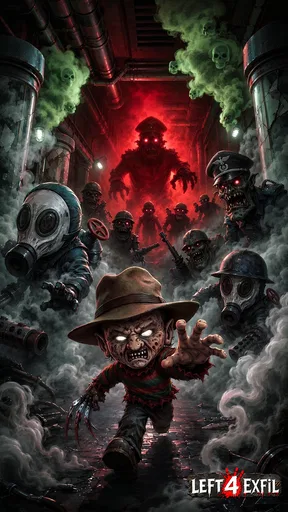





 Analysis by AppCompare
Left 4 Exfil is a role-playing game built around a simple promise: enter danger, collect useful loot, fight your way through trouble, and get out before the run falls apart. I found that idea immediately readable, but the real appeal is in how much pressure a short expedition can create. Every decision becomes a small argument with yourself: should I search one more area, take a safer route, or leave while my progress is still secure?
That makes it a different experience from a traditional role-playing game that mainly asks me to follow a long story, improve a character, and win predictable battles. Here, the extraction goal gives ordinary movement and combat more weight. A successful run feels satisfying because I chose when to stop, not simply because I defeated the final opponent.
It is available as a free game from PIXEL RABBIT LIMITED, with optional in-app purchases ranging from $0.99 to $99.99 per item. The game is rated for Everyone 10+, and its current version is 1.0.4. I would describe it as an approachable entry point for players who like the tension of loot-focused adventures but do not want to begin with an enormous, complicated system.
How the current version feels to play
The first thing I noticed is that Left 4 Exfil does not need a long explanation to communicate its basic rhythm. I go in, look for valuable or useful items, deal with threats, and decide whether the reward justifies staying longer. That loop is easy to understand, yet it creates room for cautious and aggressive play styles.
I can treat a run as a careful scavenging trip, prioritizing survival and leaving with a modest haul. I can also push deeper into danger when I feel confident, accepting that a bigger reward usually carries a bigger chance of losing the run’s value. That choice is the heart of the game, and it gives even a familiar location or encounter a different mood depending on what I am carrying.
The role-playing label matters because progress is not only about reflexes. I am constantly thinking about what is worth keeping, what can wait, and whether my current position gives me a realistic path back out. Players who enjoy planning around limited opportunities will probably get more from this design than players who want uninterrupted action.
At the same time, the game is not aimed solely at experts. The central loop is clear enough for someone who has never played an extraction-style game. I would still recommend approaching the first sessions as practice rather than as a test of skill. The most useful lesson is learning when to leave. That sounds obvious, but the temptation to continue after a good find is exactly what creates unnecessary losses.
Worth Reading Before You Choose

EA SPORTS FC Mobile 26 Is a Bigger Football Game, but It Takes Time

Flipboard Shows What News Apps Must Do Beyond the Feed

Switching to Android Auto Means Rethinking Your Driving Routine

Google Calendar Makes a Crowded Week Easier to Manage

Ludo King Makes the Most of the Minutes Between Plans

Baby Panda World Brings Quick Play to Modern Phones, but Its Game Library Feels Busy
A practical run for a busy day
Imagine having a short break and wanting something more meaningful than a completely disposable arcade round. Left 4 Exfil fits that situation when I want a compact decision-making session. I can enter with one goal, such as gathering a particular kind of useful loot or simply testing a route, then stop after a successful extraction instead of committing to a long campaign session.
This also makes it suitable for players who enjoy games in small portions. The important point is that a short session can still feel consequential. I am not just filling time; I am weighing risk, and the result gives me a reason to adjust my next attempt.
My advice is to decide on a stopping rule before starting. For example, I might leave after finding a worthwhile item, after taking significant damage, or after reaching a location that makes the return journey uncertain. This habit prevents the common mistake of turning a successful run into a needless gamble.
The useful difference between loot and progress
One of the less obvious strengths is that loot changes how I read the environment. In many role-playing games, exploration is mainly a way to move toward the next quest marker. Here, searching itself has value, but only if I can protect what I find. That makes an apparently quiet section important, because it gives me time to evaluate my situation instead of merely waiting for the next fight.
I also learned not to judge an item only by how attractive it looks at the moment. A piece of loot can be valuable in theory and still be a poor reason to extend a dangerous run. The better question is whether carrying it changes my options enough to justify the additional exposure. This is where the game rewards restraint more than simple greed.
That trade-off is particularly useful for newcomers. Rather than trying to collect everything, I suggest sorting discoveries into three mental groups: items worth risking a little for, items worth taking only when the route is safe, and items that should be ignored if they pull me away from extraction. It is a small system, but it makes the action feel more deliberate.
Combat is part of the route, not the whole route
Fighting is important, but I did not find the game most interesting when I treated every threat as an invitation to attack. Combat has to be considered alongside positioning, remaining resources, and the distance to safety. Winning a battle can still be a bad result if it leaves me poorly prepared for the next problem.
This is a meaningful contrast with many conventional role-playing games, where defeating enemies is usually the safest way to advance. In Left 4 Exfil, avoiding a confrontation can be the more intelligent move when the reward is small or the return route is already risky. That does not make the game passive; it makes combat a choice with a cost.
I recommend using early attempts to learn which situations deserve a fight and which ones are better handled by moving on. Players who rush toward every encounter may feel that the game is punishing them, while players who observe first will usually have more control over the run.
What the version and release details tell me
The game launched on July 16, 2026, and version 1.0.4 is the current release. That places it in an early stage where the core identity is already visible, but the long-term shape of the experience may still depend on how PIXEL RABBIT LIMITED continues to refine it.
I see version 1.0.4 as a reason to judge the game primarily by the loop it offers today rather than by imagined future additions. The current build needs to work for someone installing it now, and in that respect the extraction structure gives it a clear foundation. It knows what kind of tension it wants to create instead of hiding behind a vague role-playing label.
For existing users, a current-version review is also a reminder to separate personal progress from the product’s broader evolution. If I already enjoy the risk-and-reward cycle, a later update may improve the experience without changing why I play. If I am waiting for a much deeper or more expansive role-playing adventure, I should not assume that future development will automatically turn this into a different kind of game.
The early release context creates both opportunity and friction. A focused loop can be refreshing, but players who need a large amount of content, extensive customization, or a long narrative arc may find the experience narrower than expected. I would rather see the game develop its extraction identity carefully than add unrelated systems simply to appear bigger.
How current users can get more from it
Returning players should resist replaying every run in exactly the same way. The best way to test whether I am improving is to change one variable at a time: take a safer route, leave earlier, search a little longer, or engage with a threat I previously avoided. This turns repetition into useful experimentation instead of routine.
I also suggest separating “learning runs” from “reward runs.” During a learning run, I can focus on understanding routes and danger patterns without becoming upset about a modest result. During a reward run, I use what I learned and protect the haul. Mixing those goals often leads to overconfidence, because I start experimenting at the same time I am carrying something I do not want to lose.
Another practical habit is to review the reason a run failed. Was I defeated because I chose a bad fight, stayed too long, or misjudged the way back? Each answer points to a different adjustment. Simply deciding to play more aggressively or more cautiously is less useful than identifying the exact decision that created the problem.
Where the game may not satisfy every role-playing fan
Players looking for a traditional, story-led adventure should think carefully before installing. The appeal here is the run structure and the pressure of extraction, not the comfort of a clearly directed journey. If I want dialogue-heavy storytelling, a large cast, or a campaign that steadily reveals a dramatic plot, another role-playing game will probably suit me better.
It may also be a poor match for anyone who dislikes losing the value of a risky expedition. The possibility of failure is not an accidental annoyance; it is what gives the loot meaning. Players who prefer permanent, predictable progress may find the tension tiring rather than exciting.
The free entry point is helpful, but the in-app purchase range deserves attention. Optional purchases begin at $0.99 and reach $99.99 per item, so I would approach spending carefully and decide on a personal limit before buying anything. The game is easier to enjoy when purchases remain a choice rather than becoming part of the pressure to recover from a bad run.
That advice is especially relevant for families. The Everyone 10+ rating makes the game broadly accessible, but the presence of optional purchases means the device owner should still be comfortable with how spending is handled. The age label describes suitability; it does not replace sensible purchase controls or an honest conversation about limits.
How it compares with familiar alternatives
Compared with a standard role-playing game, Left 4 Exfil gives me less comfort and more uncertainty. In a conventional adventure, I usually know that completing a battle moves me forward. Here, surviving is only part of the job. I need to preserve what I collected and reach safety, which makes a cautious retreat feel like a genuine achievement.
Compared with a pure action game, it asks for more patience. Fast reactions may help during a confrontation, but they do not solve the larger problem of deciding whether to continue. If I want constant combat with little downtime, I may prefer an action-focused alternative. If I like the moment before combat, when I decide whether the reward is worth the danger, this game has a stronger argument.
It also differs from a relaxed loot game. Collecting is not automatically positive when carrying more makes me bolder or encourages me to stay too long. The most valuable skill is not maximizing every opportunity; it is recognizing when the current opportunity is enough.
For someone choosing between this and a deep, established role-playing title, I would frame the decision around session style. Left 4 Exfil is better for compact, repeatable expeditions and risk-based decisions. A larger alternative is better for players who want a broad world, extensive character development, and a more dependable sense of long-term progression.
Four questions I would answer before downloading
Is it genuinely free to start? Yes, the game is free to download and play, while optional purchases are available. I would begin without spending, learn whether the extraction loop suits me, and only then decide whether any purchase adds enough value to justify it.
Will a new player understand what to do? The main objective is straightforward: gather, fight when necessary, and exfiltrate. The difficult part is not understanding the words; it is developing judgment. New players should expect the first attempts to teach them when to stop rather than expecting immediate mastery.
Is it suitable for short sessions? Yes, that is one of its strongest use cases. A single expedition can be approached as a focused task, although the desire to push for one more reward can make a short session longer than planned. Setting a stopping rule helps.
Should I choose it over a conventional role-playing game? Choose it if risk, loot decisions, and extraction tension sound more appealing than a guided story. Skip it if losing a promising run would feel frustrating or if your main priority is character drama and a large narrative campaign.
What should I watch as the game develops? I would watch how future releases build on the central loop without weakening its clarity. The most valuable improvements would be those that make choices more meaningful, reduce unnecessary friction, and give experienced players fresh reasons to plan different kinds of runs. I would be less interested in additions that merely increase complexity without improving the decision between staying and leaving.
My recommendation after playing
Left 4 Exfil has a clear personality. It is not trying to be every kind of role-playing game at once; it focuses on the uneasy space between finding something worthwhile and getting out with it intact. That focus gives the game its best moments, especially when I have enough to feel satisfied but not enough to stop wanting more.
The current version feels most convincing when I play thoughtfully. Rushing, fighting everything, and searching without a plan make the experience harsher than it needs to be. Careful route choices, realistic stopping points, and a willingness to abandon a tempting reward reveal the stronger side of the design.
Its audience is fairly specific. I would recommend it to players who enjoy repeatable expeditions, tactical restraint, and the emotional swing between a clever escape and an avoidable loss. I would not make it my first recommendation for someone seeking a story-rich role-playing epic, a completely relaxed collecting game, or a progression system with no meaningful setbacks.
With a 4.5 average from around 1.4 thousand ratings and over 50 thousand installs, it has already attracted a modest audience for an early release. Those figures suggest that the central idea is connecting with players, but my recommendation rests more on the quality of the loop than on popularity. The best reason to try it is the decision to leave while you still can.
In the end, I enjoyed Left 4 Exfil most when I stopped treating every run as a chance to win everything. Its strongest lesson is simple: a good escape is often better than a greedy one. If that kind of pressure sounds exciting rather than stressful, this free role-playing game is worth trying, with careful attention to optional spending and realistic expectations about its focused design.
Pros
- Tense extraction gameplay rewards careful planning and quick decision-making.
- Distinct objectives give each match a clear sense of purpose.
- The post-apocalyptic setting creates a convincing survival atmosphere.
- Looting and resource management add meaningful risk-versus-reward choices.
- Short matches make it easy to play without a lengthy time commitment.
Cons
- Limited content may reduce replay value for experienced players.
- The learning curve can feel steep for newcomers to extraction games.
- Matchmaking quality may vary depending on the active player population.
- Performance can suffer on older devices during intense encounters.
- Progression may feel slow if you prefer fast access to better equipment.
FAQs for Left 4 Exfil
What is Left 4 Exfil, and what type of game is it?
Left 4 Exfil is an action-focused extraction and survival game built around entering dangerous areas, completing objectives, collecting useful resources, and escaping safely. Its gameplay combines exploration, combat, risk management, and progression. Before downloading, players should understand that success depends on planning, conserving supplies, and knowing when to leave rather than simply defeating every enemy encountered.
Can Left 4 Exfil be played offline, or does it require an internet connection?
The availability of offline play may depend on the specific version and platform, so players should check the store listing before installing. Features involving online matchmaking, shared progression, leaderboards, updates, or account synchronization generally require an internet connection. Even if some content works offline, connecting regularly may be necessary to receive patches and maintain access to the newest features.
Is Left 4 Exfil suitable for children?
Left 4 Exfil is primarily aimed at players who enjoy intense action, survival challenges, and combat-oriented gameplay. Depending on the version, it may include violence, frightening enemies, stressful situations, or other mature themes. Parents should review the official age rating, content description, and device settings before allowing younger players to download it, especially if online interaction or in-app purchases are available.
Does Left 4 Exfil include in-app purchases, advertisements, or pay-to-win mechanics?
The monetization model can vary according to the Android or iOS release and may change after updates. Before downloading, review the official store page for information about advertisements, optional purchases, subscriptions, or paid items. Players should also check whether purchases are cosmetic or provide gameplay advantages. Using parental controls and purchase restrictions is recommended if the game will be installed on a shared device.
What device requirements and storage space does Left 4 Exfil need?
Performance depends on the device, operating system, available memory, graphics hardware, and free storage. Players should confirm the minimum Android or iOS version listed on the official download page and leave additional space for installation files, updates, and cached data. Older or entry-level devices may experience longer loading times, reduced visual quality, overheating, or lower frame rates during demanding scenes.


